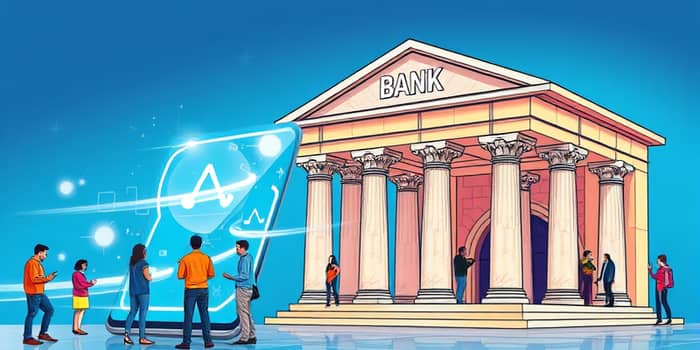
In 2025, the banking world stands at a crossroads where innovation meets heritage. Consumers can choose between fully digital institutions and time-honored traditional banks. Understanding their differences and synergies empowers you to optimize your finances.
Global digital banking has grown from a niche offering to a multi-trillion dollar industry. Meanwhile, legacy banks are racing to adopt new technologies while preserving decades of customer trust and stability.
The Rise of Digital Banking
Digital banks, also known as neobanks, have disrupted the financial landscape by operating exclusively online. They leverage mobile apps and web platforms to deliver paperless account opening and real-time money management wherever you are.
- 24/7 access to accounts via any connected device
- Lower fees and often higher savings interest rates
- Instant notifications and spending analytics
- Multi-currency support with competitive exchange rates
- AI-driven financial automation and budgeting tools
- Fast, seamless cross-border payments for global users
Yet, digital banks face challenges. Without physical branches, customers may feel isolated when seeking complex services. Technical outages and connectivity issues can disrupt access, and some users remain cautious about trusting newer brands with their savings.
Enduring Strengths of Traditional Banking
Traditional banks boast a network of branches and face-to-face advisors, built over decades or centuries. Their established reputation offers unmatched personal guidance for navigating large loans, wealth management, and intricate financial products.
- Wide branch and ATM networks for in-person transactions
- Human advisors offering tailored financial planning
- Comprehensive product suites, from mortgages to business loans
- Proven regulatory compliance and risk management
- Global presence for corporate and international clients
On the flip side, legacy banks often carry higher fees to support their branch infrastructures. Their reliance on older IT systems can slow innovation, and paper-based processes may seem cumbersome in an increasingly digital world.
Key Technologies Shaping the Future
Both banking models are converging through shared investments in cutting-edge technologies. From AI and biometrics to open banking frameworks, institutions aim to offer seamless customer experiences across digital and physical channels.
Emerging trends include advanced fraud detection powered by AI, biometric authentication replacing passwords, and open APIs that connect third-party fintech apps directly to your accounts. Meanwhile, green banking initiatives and social impact products are gaining momentum across both models.
Navigating Challenges and Opportunities
As digital banks scale, profitability and licensing hurdles loom large. Ensuring robust regulatory compliance while maintaining lean operations demands innovation in risk management. Conversely, traditional banks must modernize legacy systems without sacrificing stability.
Strategic partnerships and fintech integrations offer a middle path. Many traditional institutions collaborate with neobanks to launch digital subsidiaries, merging the best of both worlds. At the same time, neobanks pursue banking licenses and invest heavily in cybersecurity to build trust and resilience.
Making the Right Choice for Your Needs
Deciding between a digital or traditional bank depends on your lifestyle and financial goals. Consider factors such as service accessibility, fee structures, product offerings, and the level of human support you value.
- Assess whether you need face-to-face assistance for complex transactions
- Compare fee schedules and interest rates for your saving habits
- Evaluate the reliability of digital platforms and potential downtime
- Check if advanced tools like spending analytics align with your budget style
- Research each institution’s security protocols and reputation
- Factor in international needs, such as cross-border transfers and multi-currency accounts
By mapping these considerations to your daily routines and long-term plans, you can choose the institution that delivers maximum value and peace of mind.
Ultimately, banking in 2025 is not a binary choice. Many consumers combine digital and traditional services to craft a personalized financial ecosystem. Whether you opt for a nimble neobank, a heritage institution, or a hybrid approach, the future of banking revolves around agility, security, and exceptional customer experience.
Embrace the transformation, stay informed about new features, and align your banking relationships with your evolving needs. In doing so, you’ll harness the full power of both digital innovation and time-tested trust.
References
- https://www.bankrate.com/banking/digital-banking-trends-and-statistics/
- https://www.grasshopper.bank/digital-banks-vs-traditional-banks-vs-fintechs-what-sets-them-apart/
- https://fintechreview.net/bank-digital-the-new-standard/
- https://www.muralpay.com/blog/online-vs-traditional-banking-key-differences-pros-cons
- https://theuxda.com/blog/7-digital-banking-trends-to-elevate-financial-brands-in-2025
- https://www.absrbd.com/post/digital-banking-statistics
- https://www.synchrony.com/blog/banking/online-vs-traditional-banks
- https://seon.io/resources/neobanking-index/