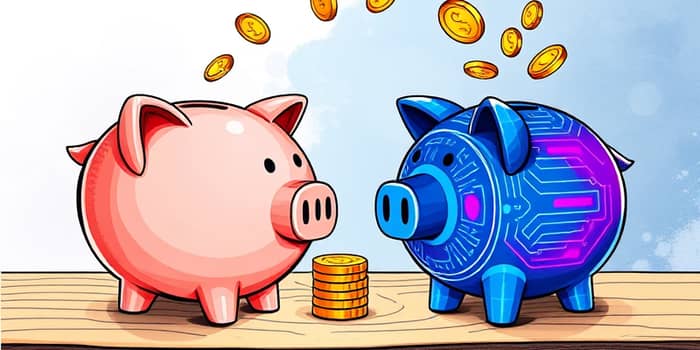
In today’s fast-moving financial landscape, the choice between a digital high-yield savings account and a traditional savings account can mean the difference between watching your money stagnate or watching it flourish. With rising interest rates and evolving banking technology, understanding the trade-offs and benefits of each option is more important than ever.
Defining Traditional and High-Yield Accounts
Traditional savings accounts are offered by brick-and-mortar banks requiring visits and maintain a physical presence through branches and ATMs. These accounts often feature ease of cash handling and personal banker relationships, but their interest rates are typically very low, sometimes as little as 0.01% APY at major institutions. Fees are usually modest or non-existent, though some banks impose minimum balance requirements or charge monthly maintenance fees.
High-yield savings accounts are generally offered by online-only banks or digital subsidiaries of large banks. With incredibly competitive APY rates often ranging from 4% to 5% as of May 2025, these accounts deliver substantially higher returns. They are managed entirely through online banking platforms and mobile apps, featuring digital platforms with 24/7 access, device authentication, and fast electronic transfers. Most digital savings accounts come with no monthly maintenance fees, though some require a minimum opening deposit.
Current Rates at a Glance
As of May 2025, the gap between traditional and digital high-yield savings rates has never been wider. Below is a snapshot of top offerings in the market today:
These figures underscore how no monthly maintenance fees combined with high APYs can transform a savings strategy, especially for emergency funds or short-term goals.
Key Features: Digital vs. Traditional
Beyond rates, each account type offers distinct features that impact usability and convenience. Digital savings accounts excel in streamlined sign-up processes, often allowing users to complete account opening in under five minutes via a mobile app. Biometric logins and instant alerts ensure secure account setup in minutes. They also integrate seamlessly with other digital financial tools, facilitating quick transfers and automated savings plans.
Traditional accounts still hold sway for customers who value in-person service and cash transactions. Branch networks provide opportunities for face-to-face consultations, safe deposit box access, and immediate cash deposits or withdrawals. For savers who prefer personal interaction or need to deposit checks or cash regularly, traditional banks maintain an edge despite their lower rates.
Pros and Cons of Digital High-Yield Accounts
Digital high-yield savings accounts have revolutionized how consumers grow their money, but they carry trade-offs alongside their strong performance.
- FDIC-insured up to $250,000 for peace of mind on all deposits.
- Potential APYs of 4%–5%, dramatically outpacing traditional banks.
- instant customer support via chat or phone, available around the clock.
- Intuitive mobile apps with tools for goal tracking and auto-transfers.
However, digital-only options may pose challenges for certain savers.
- low initial deposit requirements at some institutions may be higher elsewhere.
- Inability to deposit cash directly or access a physical branch.
- Potential delays when transferring funds between different banks.
Choosing for Your Goals
Your ideal savings vehicle depends on both financial objectives and lifestyle preferences. Consider the following scenarios:
- Building an emergency fund that earns market-leading interest yet remains accessible instantly.
- Saving for a down payment where consistent growth reduces the time to your goal.
- Needing regular cash deposits or personalized financial advice in person.
Safety and FDIC Insurance
Regardless of account type, it is essential to verify government-backed insurance coverage. Both digital and traditional bank accounts are FDIC-insured up to $250,000 per depositor, per bank, per ownership category. This protection ensures your principal is secure even in the unlikely event of a bank failure. Always confirm the bank’s FDIC status and review your total coverage if you hold multiple accounts.
Actionable Tips for Savers
Armed with knowledge of rates, features, and safety measures, you can take concrete steps to optimize your savings journey:
First, shop around and compare APYs regularly. Interest rates can change quickly when central banks adjust benchmark rates, so checking every quarter can keep you on the highest yield available.
Second, leverage automatic transfers. Set up recurring transfers from checking to savings right after payday to make saving effortless. Over time, this habit can compound into significant growth, thanks to daily interest calculations.
Third, read the fine print. Review any account requirements for minimum balances or withdrawal limits. Even strong APYs can be offset by unexpected fees if you exceed transaction caps.
Finally, diversify your cash holdings. While a high-yield savings account is ideal for short-term goals and emergency reserves, consider certificates of deposit for medium-term savings and money market accounts for a mix of features.
Conclusion
Choosing between a digital high-yield savings account and a traditional savings account is a decision that balances return, convenience, and personal preference. For those seeking maximum growth on emergency funds or near-term goals, digital accounts offer incredibly competitive APY rates and modern convenience. Conversely, savers who prioritize in-person service and cash handling may find traditional banks a better fit despite lower yields.
By evaluating your financial objectives, exploring the latest rates, and considering the full range of features, you can select a savings strategy that not only secures your funds but also accelerates your path toward larger dreams and greater financial resilience.
References
- https://www.nerdwallet.com/best/banking/high-yield-online-savings-accounts
- https://www.bankrate.com/banking/savings/best-high-yield-interests-savings-accounts/
- https://fortune.com/article/best-high-yield-savings-accounts/
- https://www.investopedia.com/high-yield-savings-accounts-4770633
- https://www.youtube.com/watch?v=14PukyE4O_4
- https://www.openbank.us/banking/high-yield-savings-account
- https://www.td.com/us/en/personal-banking/learning/types-of-savings-accounts
- https://www.usbank.com/bank-accounts/savings-accounts.html